Four Interfaces, One Shared Backend
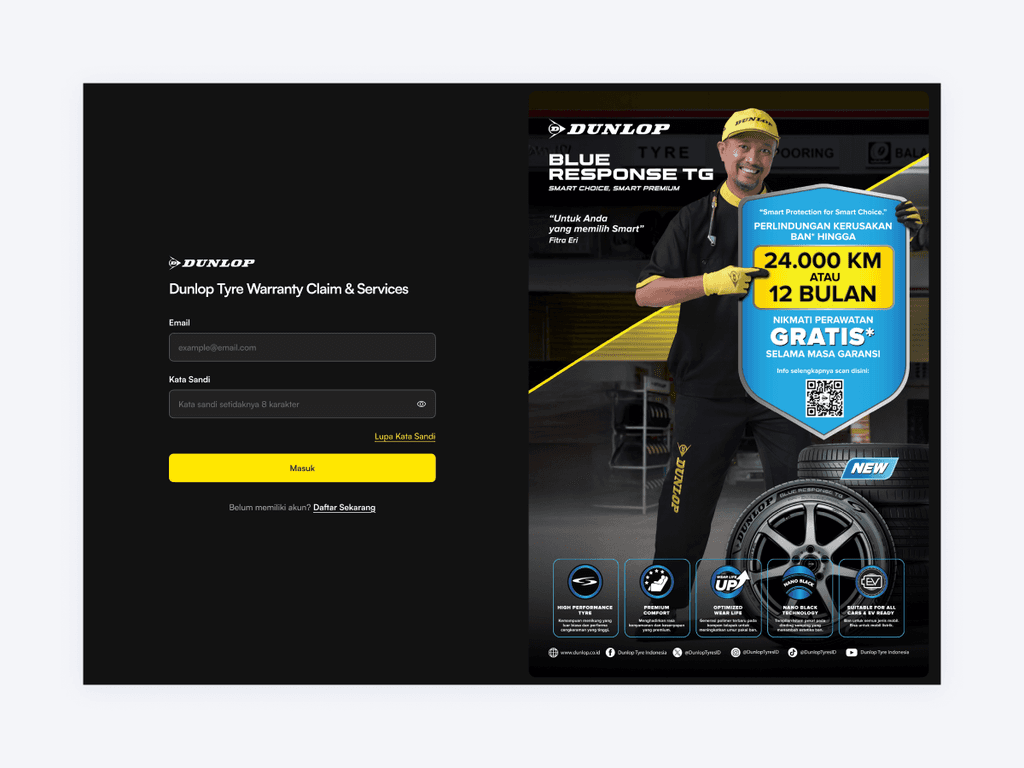
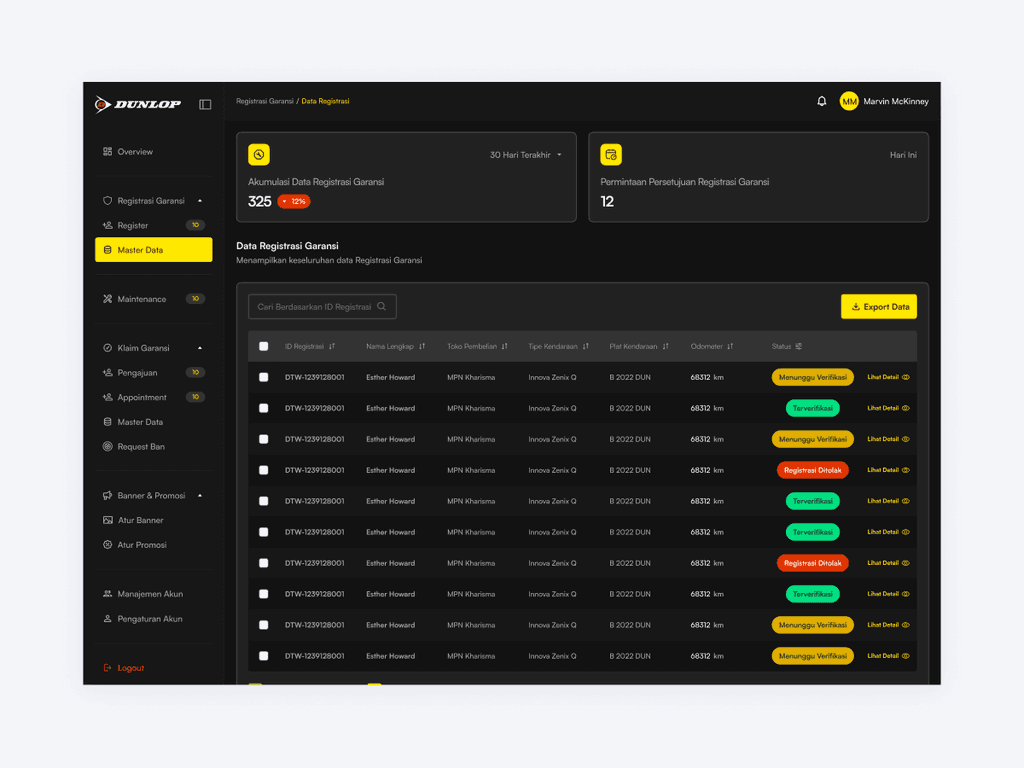
Not one admin platform with role switching. Four distinct interfaces, connected through a shared backend, one for each of the four users. A shop staff member processing a claim at the counter doesn’t need to see HQ’s national dashboard. Splitting the experience by role meant each person only sees what their job actually requires, which kept the system fast to learn instead of overwhelming.
Photo Validation as The Fraud Checkpoint
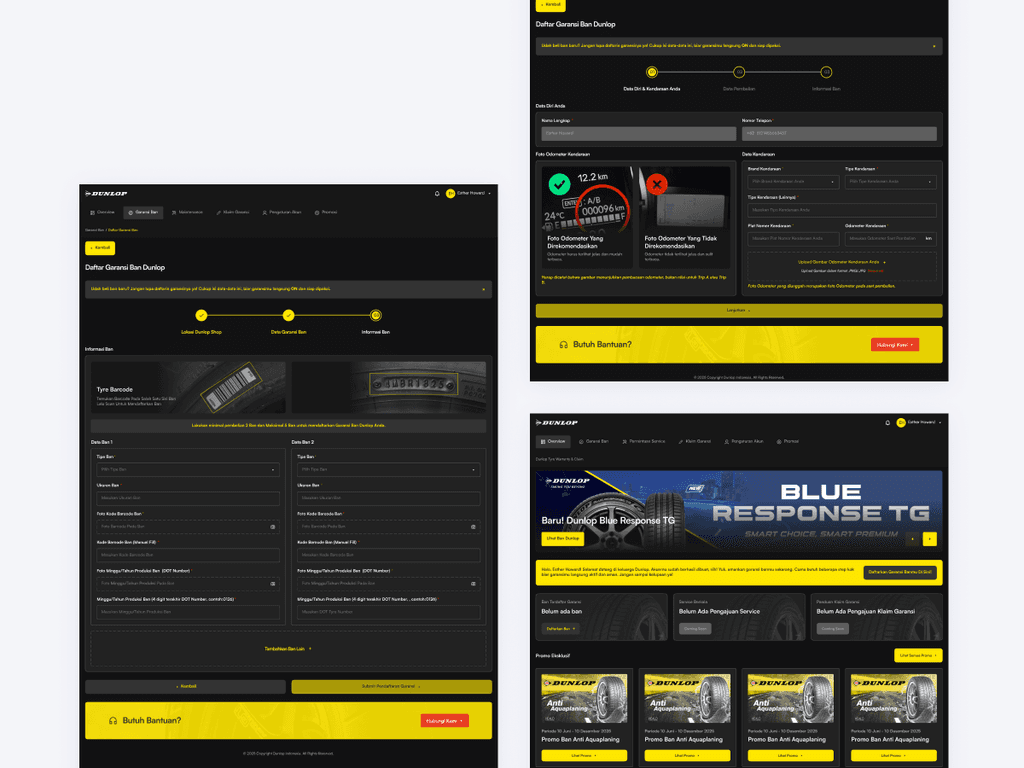
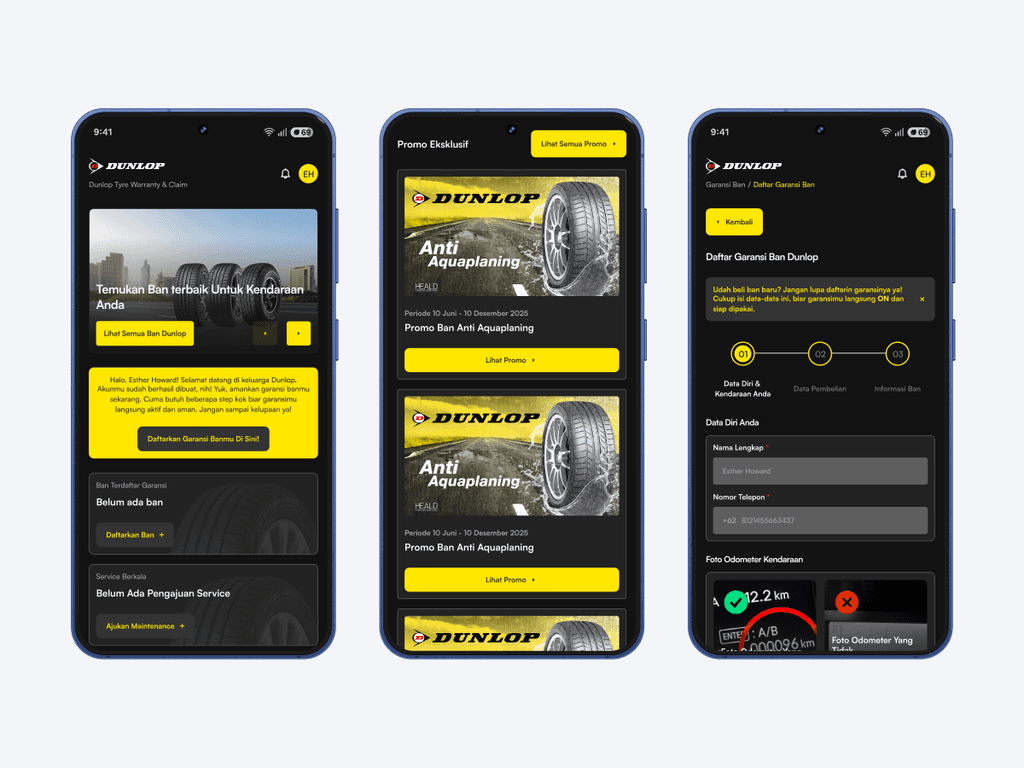
Closing the fraud loop on tire code registration was a core business requirement, not a nice-to-have. Customers and shops both needed a way to prove a claim was legitimate without a manual review taking days. So I built in a mandatory odometer photo step, with live accept or reject feedback. It gives HQ a verifiable audit trail that manual paperwork never could, and gives customers a claim that resolves in minutes instead of waiting on a phone call.
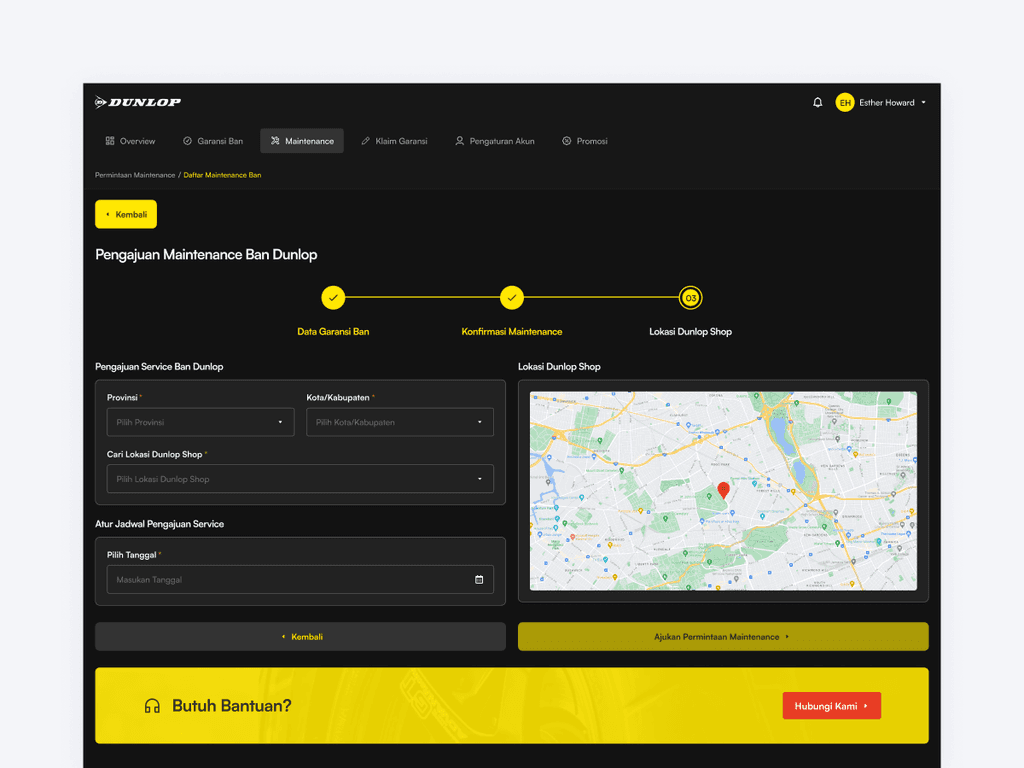
Guided Steps Over Long Forms
Most customers register a tire once or twice in its lifetime. A long form built for that kind of infrequent use loses people halfway through. So registration and maintenance requests are broken into short, sequential steps instead, prioritizing customer completion over data collected in one screen.